

Family Crests Store
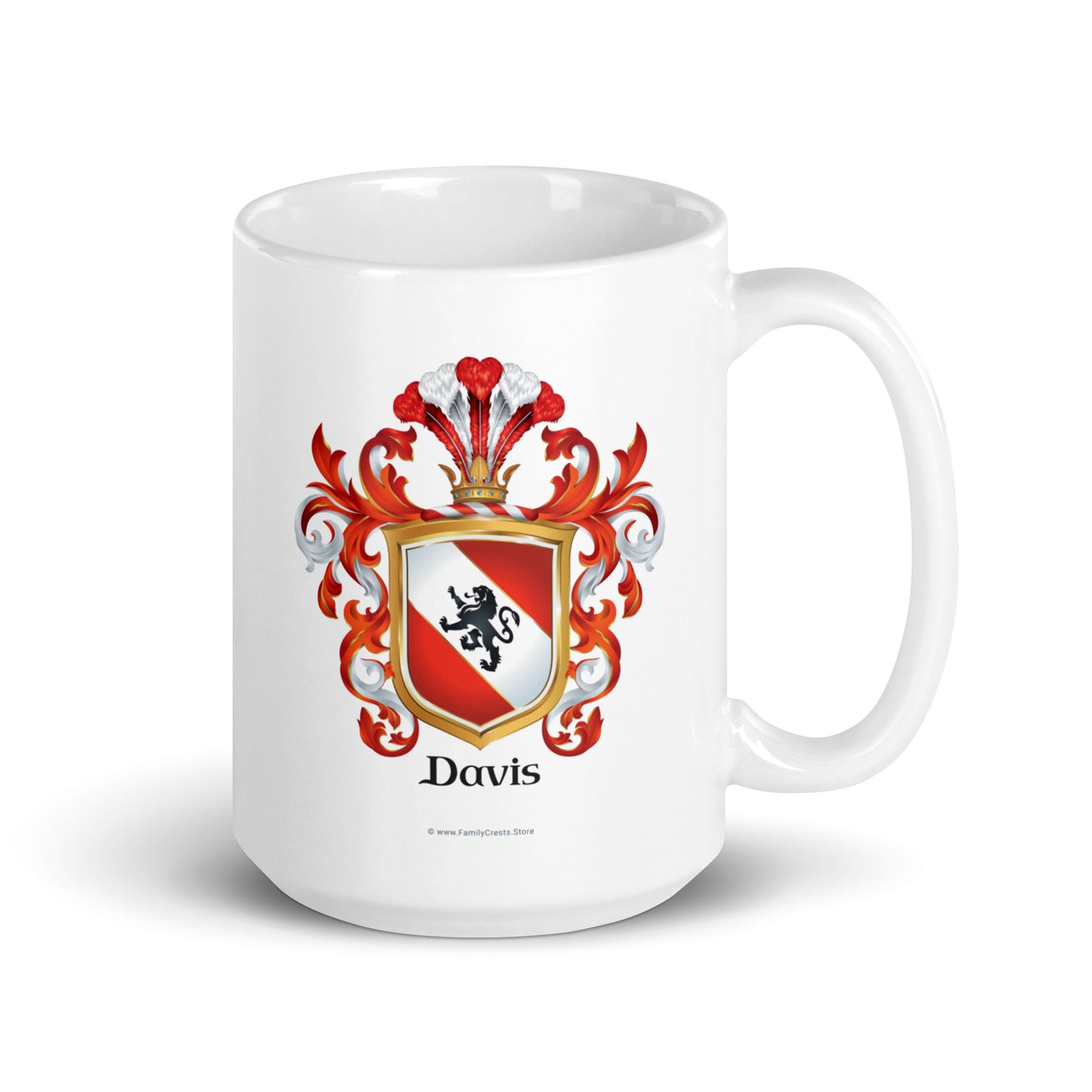
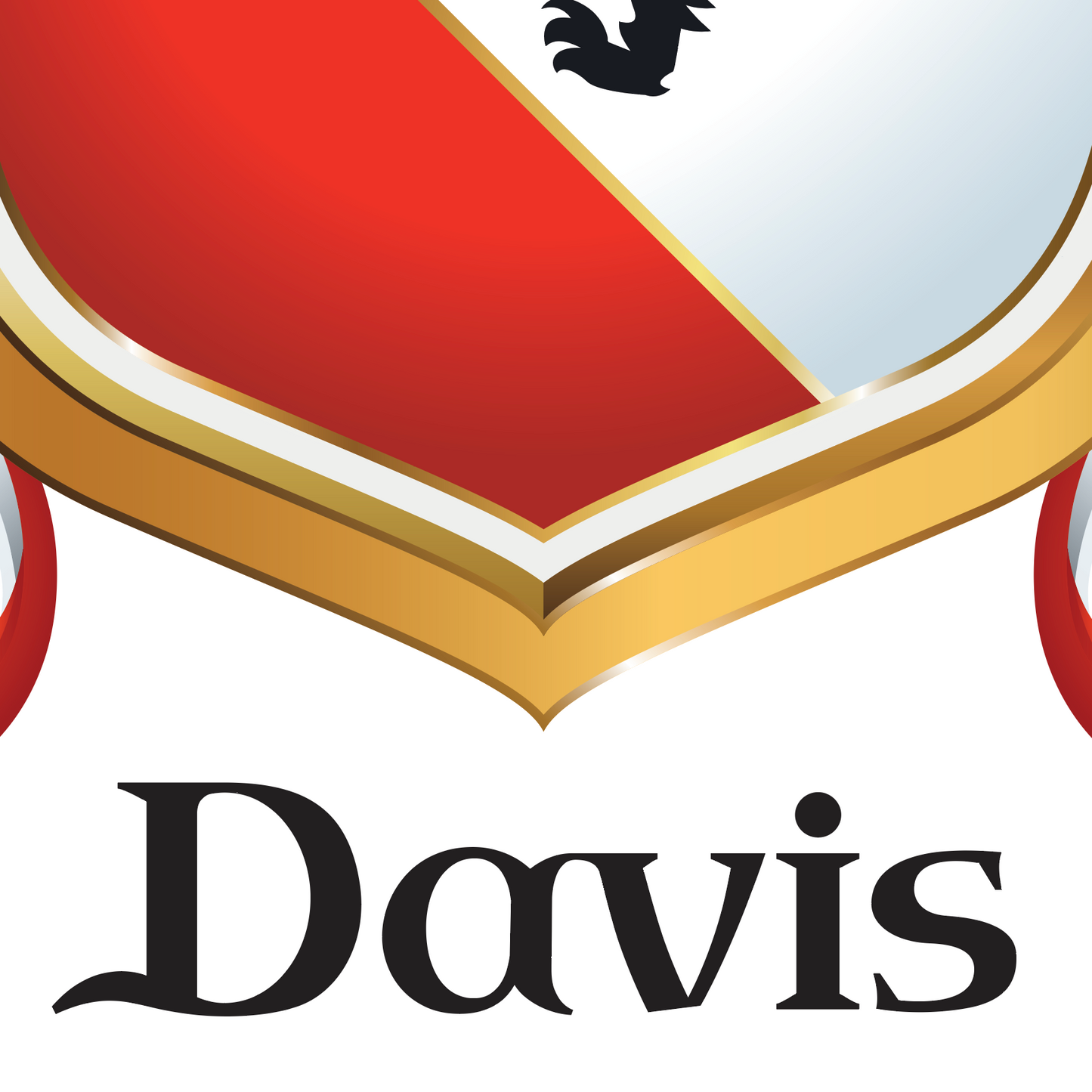
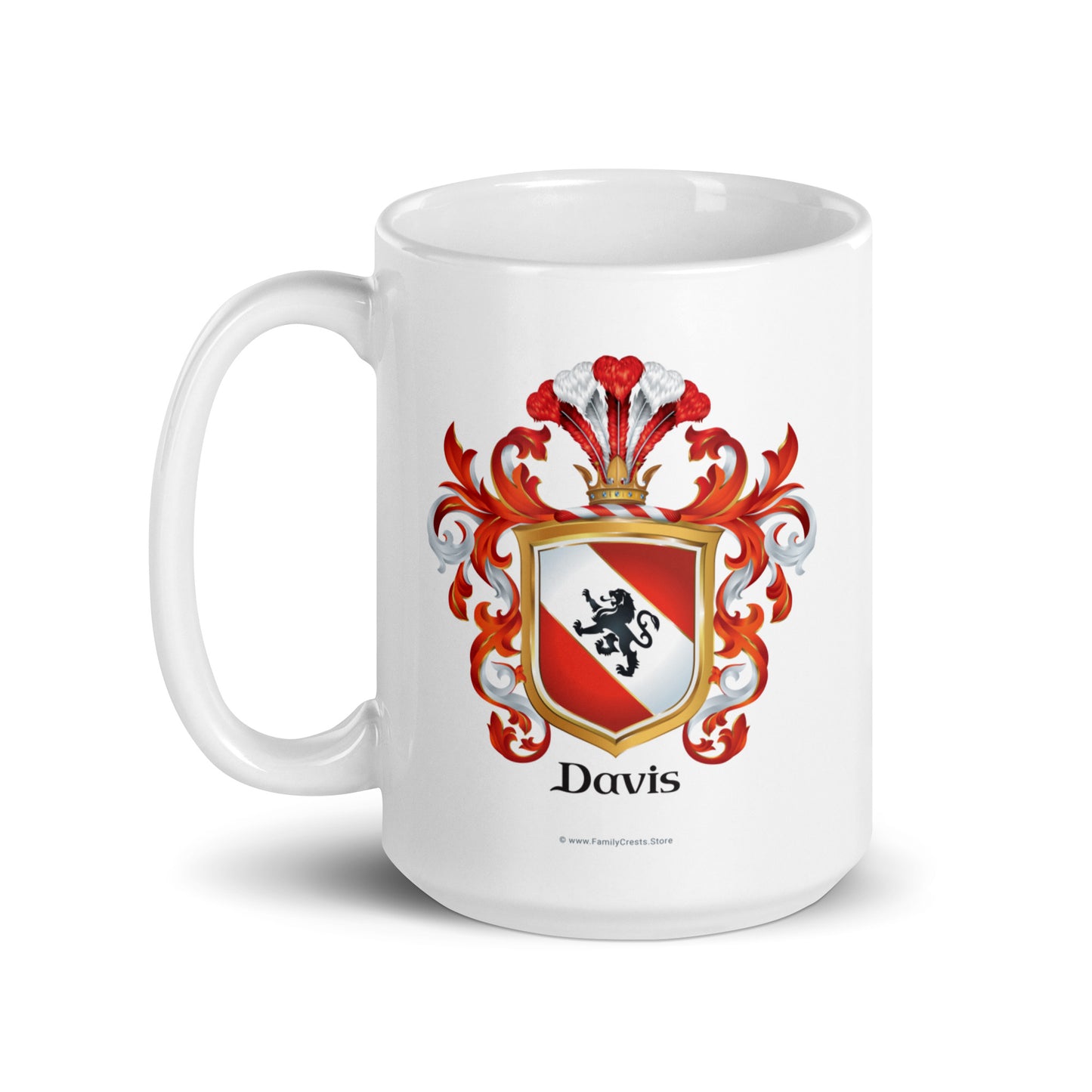
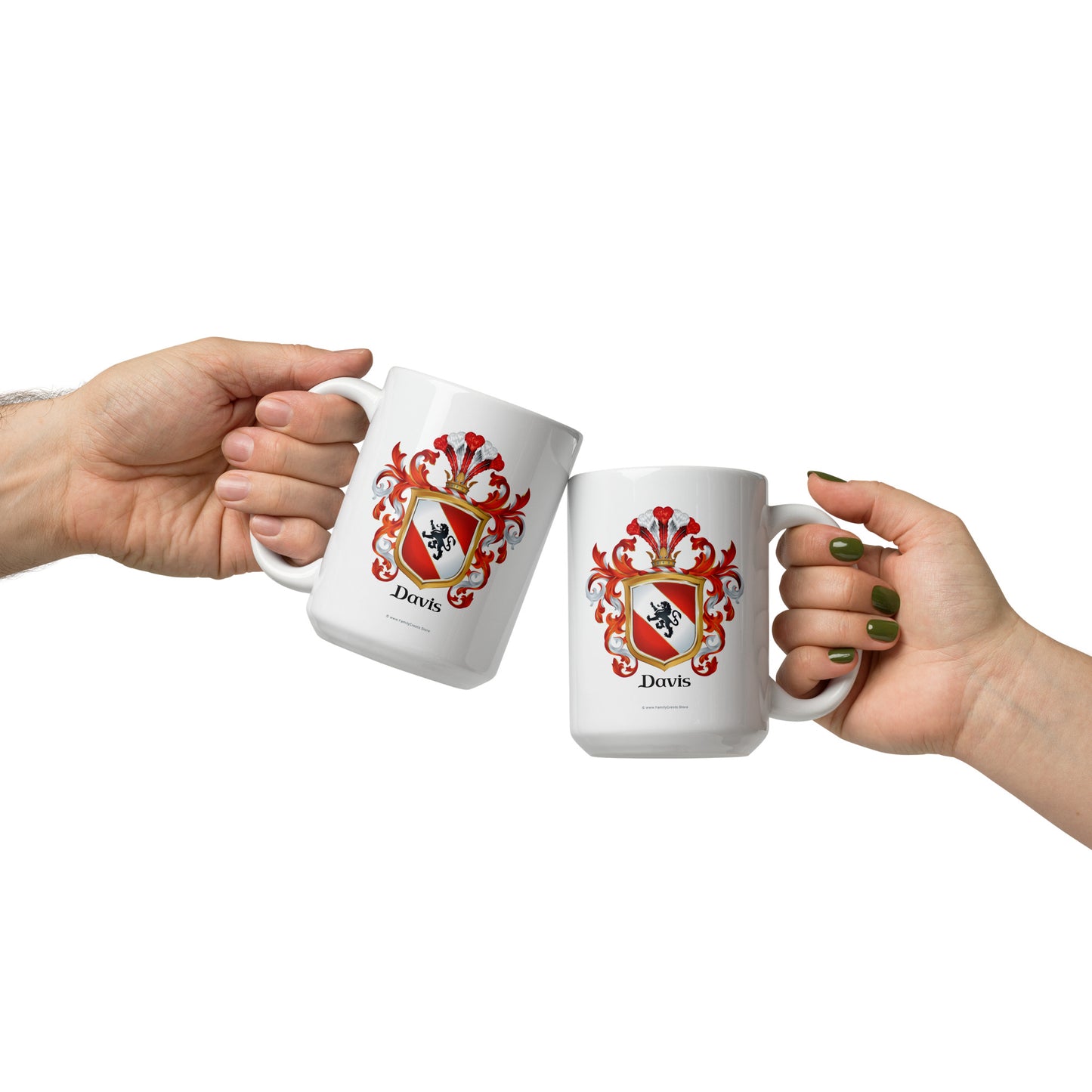
Davis Family Crest mug
Davis Family Crest mug
Couldn't load pickup availability
A Davis Family Crest mug—the perfect gift for family and friends. Beautifully illustrated. Carefully researched. Uniquely personal.
This genuinely legendary family crest (see artist's note below) is eminently suited for a proper brew—a meaningful gift for milestone birthdays, Father’s Day, a new home, or Christmas morning.
The origin of the Davis surname
The surname Davis is a prolific name worldwide with early Christian, Welsh-Celtic origins. It is derived from the traditional patronymic Welsh naming custom, meaning it originally denoted "the son of David." The personal name David stems from a Hebrew root meaning "beloved." Due to regional adaptations and phonetic changes over centuries, the surname developed numerous spelling variations, including Davies, Davie, Davi, Davey, Davy, Divis, and Davison.
The widespread adoption of Davis and Davies as a fixed hereditary surname traces back to 1535 onwards in Wales. During this period, the integration of the Welsh legal system into English Common Law forced a shift away from traditional fluid patronymics to conform with English naming conventions. Because the population drew from a relatively small pool of traditional Christian names when fixing their family names, this legal transition ultimately resulted in a limited number of unique surnames across Wales.
The symbolism of the Davis coat of arms
The primary coat of arms associated with the Davis lineage was formally registered and recognised in 1581 at Gwysaney in Flintshire, Wales, the ancestral seat of the family. It was later codified as the definitive arms for this name in Burke’s General Armory. The core imagery on the shield is much older than the surname itself, originating in the 12th century (the 1100s) when it was borne by Cynrig Efell, Lord of Eglwysgleis and son of Madog ap Maredudd, the last reigning Prince of United Powys.
The specific visual components of this historic shield carry documented heraldic meanings:
The Red Shield: The red background of the shield represents military strength, bravery, and fortitude.
The Diagonal Band: The diagonal strip traversing the shield symbolizes success in battle.
The Black Lion: As the central figure, the lion represents majesty and natural leadership, while its black coloration specifically signifies constancy and dauntless courage.
The Raised Paw: The lion is depicted with one paw raised, a traditional posture reflecting the lion’s vigilance and its absolute readiness for opportunity or challenge.
White or Silver Elements: The white or silver accents used on the band and details signify peace and sincerity.
Artist’s note
First up...I really like this black lion. Secondly, while working on the artwork for the Davis crest, I came across some cracking yarns tied to the family name that were just too good to leave out. Beyond the symbols on the shield, the history is full of some pretty wild medieval tales...
Legends of the Davis coat of arms
The Twin Warrior Lords: The name of the ancestral arms bearer, Cynrig Efell, relies on the medieval Welsh word Efell, which translates literally to "Twin." Cynrig and his identical brother, Einion Efell, were sons of Prince Madog ap Maredudd. Under invading English Norman laws, the twins were classified as illegitimate, but native Welsh Law allowed fathers to formally recognize children and grant them full inheritance. Prince Madog openly utilized Welsh law to establish his twin sons as Marcher Lords along the volatile borderlands with England, where Cynrig adopted the vigilant black lion standard to defend his mountain territory.
The Arthurian Mabinogion Connection: Prince Madog ap Maredudd is immortalized as a central character in the famous medieval Welsh literary saga, The Dream of Rhonabwy, found within the historic Mabinogion texts. The story begins with Prince Madog sending out his military retainers to find his rebellious brother. During the search, a soldier named Rhonabwy rests on an enchanted yellow ox-skin and is magically transported back in time to the mythological court of King Arthur, directly bridging the historical Davis lineage with classic Arthurian lore.
The "Hosannah" Victory of Gwysaney: Gwysaney Mansion, the ancestral seat where the Davis coat of arms was registered in 1581, derives its name from a linguistic corruption of the exclamation "Hosannah." According to early Welsh historians, these family lands were the site of the famous 5th-century "Alleluia Victory." A band of local Christian defenders faced a massive invading army of Saxons and Picts. Instead of an armed clash, the defenders waited in the mountain pass and shouted "Alleluia" at the top of their lungs. The echoing roar panicked the invaders into a full retreat without a single drop of blood being spilled, marking the ground as a historic site centuries before the Davis estate was built upon it.
About the artist
Each coat of arms in the Family Crests Store is an artwork by heraldic artist Éamonn Breathnach. All are carefully researched, drawing from the earliest available records across multiple heraldic archives. Noted for their elegance and attention to detail, these artworks make meaningful gifts for family occasions.
Product details
- Ceramic
- 15 oz mug dimensions: 4.7″ (11.9 cm) in height, 3.3″ (8.5 cm) in diameter
- Lead and BPA-free material
- Dishwasher and microwave safe
No Warehouses. No Waste. Just for you, made to order.
This product is printed especially for you when ordered, one at a time, by royal decree of Mother Nature to keep the realm beautiful. Family Crests Store guarantees that all products comply with EU and USA safety standards.
Don’t see your family name?
If you'd like a name added to the collection, please get in touch. ⚜️
Share